Decision work
A ProConCloud is useful before a decision, but it may be just as useful after a decision has already been made.
Most pro/con lists are used too early and too flatly. We write one column of advantages, one column of disadvantages, count the emotional weight of each side, and then pretend the decision is now clearer.
That can help a little. But it also loses the shape of the decision. A real decision is rarely “this has more pros than cons.” It is usually a choice between two actions that each protect something important and each create trouble somewhere else.
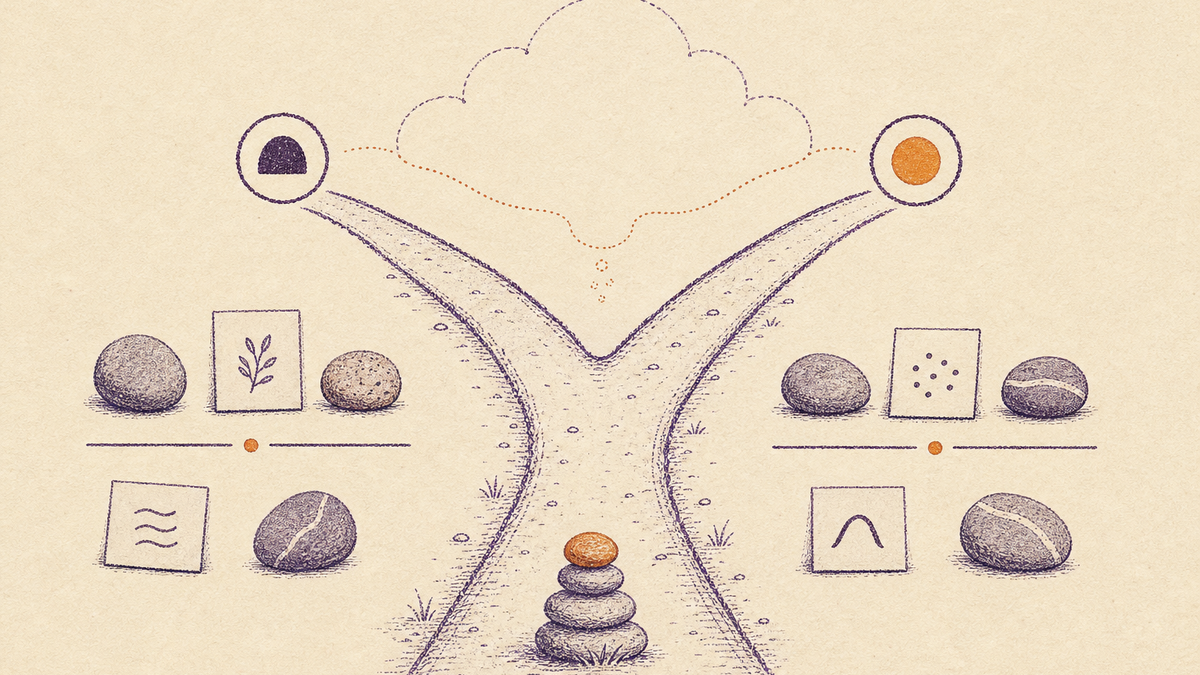
The ProConCloud is interesting because it keeps that tension visible. It does not only ask, “What was good and bad about this option?” It asks what conflict the option was trying to resolve.
After the decision, the reasons become easier to see
Before a decision, people often argue from preference. One side wants the change. Another side wants to keep things as they are. The conversation can turn into persuasion, defence, or politics.
After the decision, some of the heat has gone out of it. The action was taken. Reality has started to answer back. That makes it a good moment to map the decision again.
What did this decision protect? What did it make possible? What did it make harder? What risk did it accept? What risk did it avoid?
Those questions are better than “Was this a good decision?” They let you see the decision as a trade-off inside a system, not as a moral grade on the people who made it.
The pros and cons are not separate piles
The simplest use is to take a decision that was already made and put the two visible options back on the table. The action that was chosen goes on one side. The action that was not chosen goes on the other.
Then ask for each side: what was the good reason for it, and what was the bad outcome it could create?
This is where the structure starts doing work. The pros and cons stop being loose opinions. They become connected to the needs behind the decision.
A pro is not just “this was nice.” It is a need that got served. A con is not just “this was annoying.” It is a cost, side effect, or neglected need that came with the action.
It creates sympathy without removing judgment
Looking back this way makes a decision more understandable. That does not mean it makes the decision automatically good.
Some decisions were badly made. Some ignored obvious risks. Some protected the wrong thing. The point is not to excuse them. The point is to see what they were trying to solve, so the next decision is not just a reaction against the previous one.
That is the trap in many retrospectives. A decision produces pain, so the next group swings to the opposite action. But if they do not understand the original conflict, they often recreate the same problem in reverse.
The ProConCloud helps because it gives both sides their intelligence. It says: there was a reason to move, and there was a reason to hesitate. There was a cost to action, and there was a cost to inaction.
The cloud turns blame into material
Blame is often too small. It picks a person or a team and says: this happened because they chose badly.
Sometimes that is partly true. But it is rarely enough to learn from. A ProConCloud pushes the conversation toward structure. What pressure made that choice attractive? What constraint made the alternative look impossible? What assumption linked this action to that need?
Once those assumptions are visible, the lesson can become practical. Maybe the decision needed better timing. Maybe it needed a smaller experiment. Maybe the rejected option contained a real need that should have been protected another way.
A decision review should not only ask whether the choice worked. It should ask what conflict the choice was carrying.
A better way to remember decisions
This is why I like the ProConCloud as a retrospective structure. It preserves the shape of a decision.
Instead of remembering only the outcome, you remember the conflict: the common goal, the competing actions, the needs on both sides, the expected negative effects, and the learning after the fact.
That kind of memory is much more useful. It helps you understand why the decision made sense at the time, why it hurt where it hurt, and what kind of better option might exist next time.
The goal is not to make every past decision look wise. The goal is to make the decision legible enough that its pros and cons can teach you something.